
اتصل بنا
+86-18811954888
2026-08-20
You have a site drawing that says "street lighting to be supplied and installed," but the pole size is not written anywhere. Before you send the request to a supplier, you have to answer one practical question: what size of street lights does this road actually need?
The short answer is that street light poles range from roughly 3 m to more than 15 m in height. Residential streets typically use 6-8 m poles, urban collector roads use 8-12 m, highways and major arterials use 10-15 m, and large interchanges, ports, or stadiums move into 15-40 m high-mast territory. The figure that lands in your specification depends on road width, traffic speed, luminaire optics, pole spacing, and the lighting standard your project must satisfy.
Most manufacturers and design guides group street light poles into six broad application categories. The numbers below are summary ranges, not universal specifications, but they match what you will see on typical municipal projects.
| Application | Pole height (m) | Pole height (ft) | Typical spacing | Typical luminaire |
|---|---|---|---|---|
| Residential streets | 5-8 | 16-26 | 30-45 m | 30-70 W LED |
| Urban and collector roads | 8-10 | 26-33 | 35-50 m | 70-150 W LED |
| Highways and arterials | 10-15 | 33-49 | 40-60 m | 150-300 W LED |
| Parking lots | 6-10 | 20-33 | 20-35 m | 60-150 W LED |
| Parks and pathways | 3-5 | 10-16 | 15-25 m | 15-40 W LED |
| High-mast areas | 15-40 | 50-131 | 80-120 m | 4-12 high-power fixtures |
Two things deserve emphasis. First, residential and park poles rarely need to be tall because the lit area is narrow and glare control matters more than raw brightness. Second, highway lighting is about uniformity as much as it is about height, which is why wide roadways use taller poles with precisely aimed optics rather than short poles with wider beam angles.
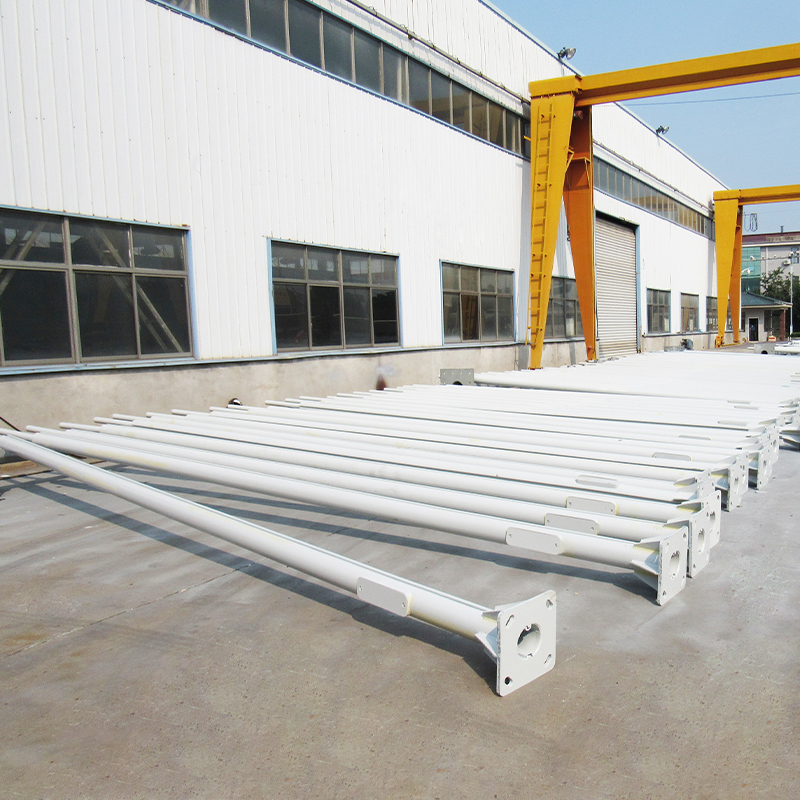
When a project falls outside these standard ranges, manufacturers such as DDK Tech Elefacility can produce customized round, hexagon, octagonal, or square steel street light poles to match the drawing without changing the underlying height calculation.
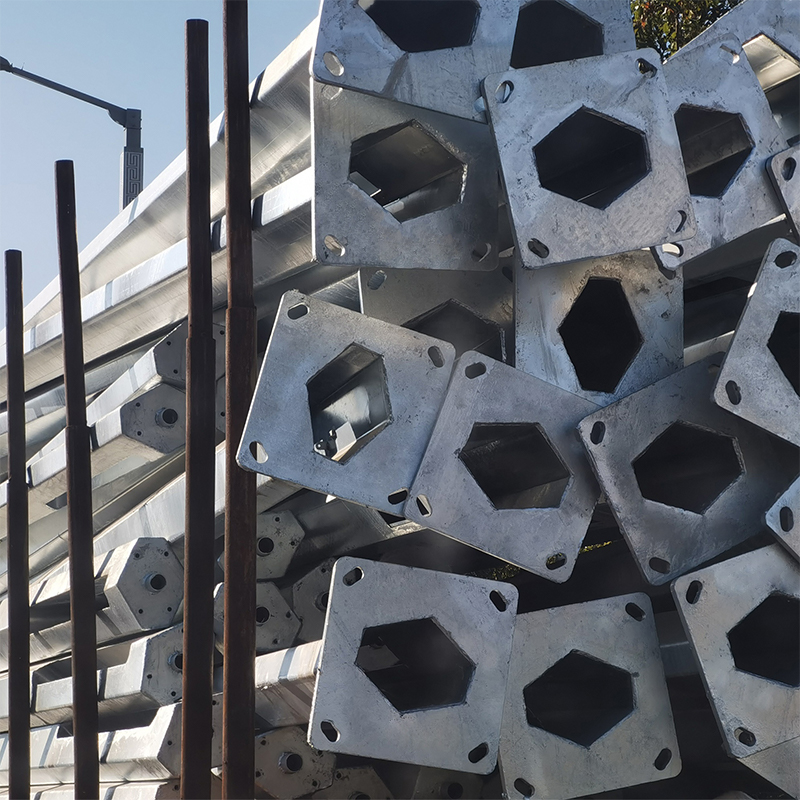 Wholesale Customized Round Hexagon Octagonal Square Steel Street Light Poles for DDK Tech Elecfacility Yangzhou Co., Ltd. is China wholesale Customized Round Hexagon Octagonal Square Steel Street Light Poles for Outdoo... View Product →
 Pole height and mounting height are not the same value, and confusing them is a common specification error. Mounting height is the vertical distance from the road surface to the center of the luminaire. Pole height is the distance from the ground to the top of the pole shaft. When a luminaire is installed on a single arm or twin bracket, the arm places the light source slightly below the top of the pole.
In practice, for a standard single-arm installation the mounting height is the pole height minus roughly 0.2-0.5 m, depending on the bracket geometry. Lighting design software uses mounting height for all photometric calculations: illuminance on the road, uniformity ratio, and glare rating. Pole height, on the other hand, drives structural calculations such as wind load, foundation design, and transportation length. A 10 m pole with a 1.2 m arm gives you a mounting height of around 9.5-9.8 m after the bracket drop, so do not assume the lamp sits exactly at 10 m.
If you are selecting a pole size rather than copying an approved drawing, six factors decide the final height and shaft dimensions.
Wider carriageways require higher mounting so the light cone reaches the opposite curb without excessive glare. A common rule of thumb for one-sided lighting is that mounting height should be at least half of the road width; for example, a 12 m wide road gets a minimum 6 m mounting height, and most designers would choose 8 m to improve uniformity.
Roads for higher vehicle speeds need longer visibility distance and more uniform luminance. European practice under EN 13201 and similar standards divides roads into lighting classes (M1 through M6) that specify average luminance, overall uniformity, and longitudinal uniformity. A faster road with a more demanding class usually means taller poles and tighter spacing.
LED street lights with asymmetric optics can use slightly lower mounting heights than older high-pressure sodium fixtures while still meeting uniformity, because their beam distribution is controlled more precisely. That is why many municipal retrofit projects keep the existing pole height but replace the fixture with a higher-efficiency LED lamp rather than changing the pole.
A credible example is the 40-200 W high-efficiency LED street light used on collector roads: it fits both 8 m and 10 m mounting heights because the optical lens is matched to the intended road class.
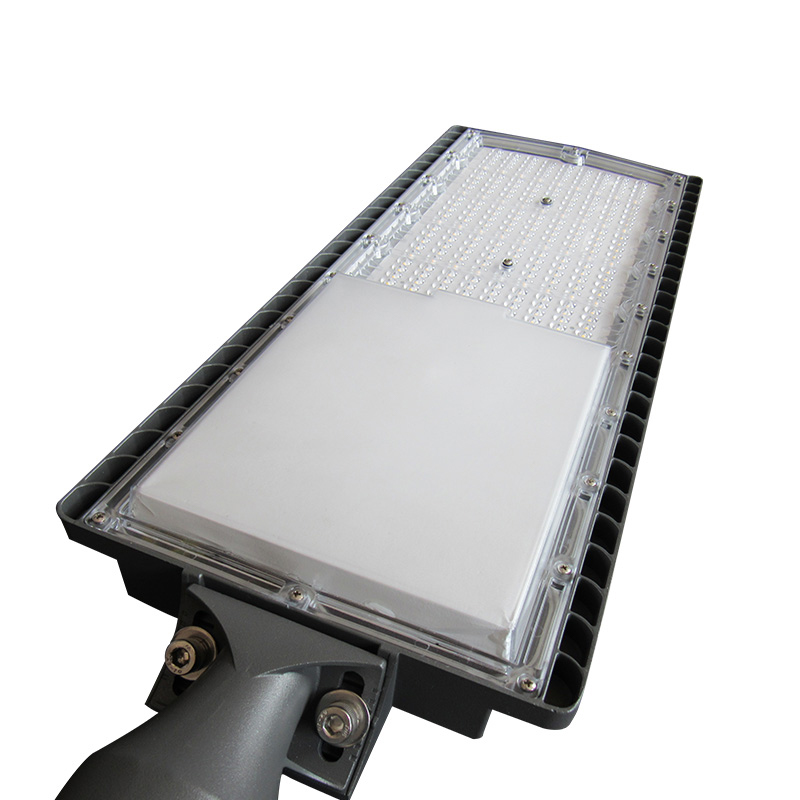 Wholesale DDK-LD121 40-200W LED Street Light High Efficiency Outdoor Lamps Suppl DDK Tech Elecfacility Yangzhou Co., Ltd. is China wholesale DDK-LD121 40-200W LED Street Light High Efficiency Outdoor Lamps suppliers an... View Product →
 The distance between poles is the second half of the geometry puzzle. If spacing is wider, the height and the luminaire output must both increase to keep the midpoint illuminance above the minimum. Typical spacing for one-sided layouts is 3 to 4 times the mounting height. If your layout forces a 50 m spacing, an 8 m mounting height will probably be insufficient; you will move to 10 m or higher.
Some countries fix pole heights by road category in their national standards, leaving the designer no freedom to change them. Others simply state performance criteria, so the height is free as long as uniformity and glare limits are met. Check the applicable code before doing your own sizing; changing pole height after permits are issued is expensive.
Wind is the main enemy of tall poles. A taller pole experiences higher wind pressure and greater bending moment at the base, which forces a larger shaft diameter or a thicker wall. Coastal sites add salt corrosion, and high-wind regions may require hinged poles that are easier to lower for maintenance. These structural factors define the pole size just as much as the lighting calculation does.
When no approved design exists, you can produce a preliminary pole height in three steps.
Worked example: a 14 m wide collector road with one-sided lighting. Fifty percent of the width is 7 m; with LED optics, 9 m is a sensible mounting height, giving a pole height of about 9.5-10 m after arm selection. Spacing of 36-45 m fits the 3-to-4-times rule. If the lighting class demands higher uniformity, reduce the spacing rather than increasing the height further.
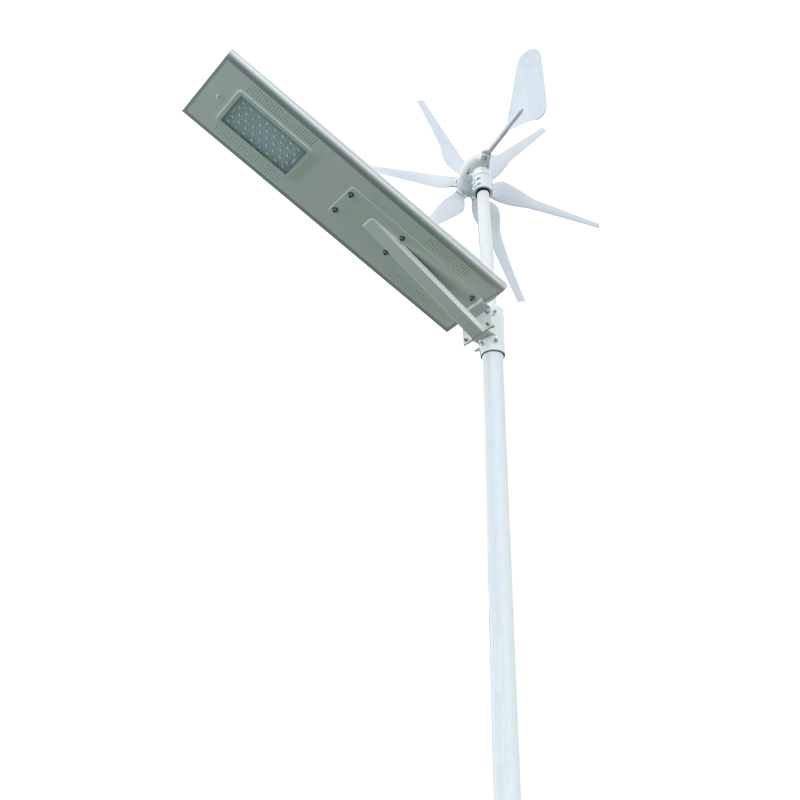
Solar street lights do not follow exactly the same sizing logic as grid-powered poles, because the pole must now carry additional equipment. A separated solar system places the photovoltaic panel on a bracket near the top of the pole, adds a battery box at the base or on the shaft, and routes DC cables down to the controller. This extra weight and wind-catching surface changes both the structural calculation and the practical pole height.
In most solar projects, the photovoltaic panel is oversized to guarantee autonomy during cloudy days, so the bracket must be sized to prevent shading of the panel by the luminaire arm. All-in-one solar lights solve part of the problem by integrating the panel, battery, sensor, and lamp in one head unit, which lets the pole behave more like a conventional street light pole with a heavier top load.
Height ranges for solar lighting are generally shorter than grid equivalents. Village roads and pedestrian paths commonly use 4-6 m solar poles; rural collectors use 6-8 m; and main roads rarely exceed 10 m, because the PV panel area needed for high-output luminaires becomes too large to mount economically on a tall pole. This is also where maintenance and safety considerations come into play, since damaged panels, loose brackets, or undersized foundations are more visible on tall solar poles - one reason local agencies review how street light poles improve city safety at night before approving an installation.
Once the height and mounting configuration are clear, the purchase decision moves to execution details that determine whether the delivered pole matches the design intent.
Standard poles are cheaper and ship faster, but custom fabrication becomes unavoidable when the project specifies a nonstandard height, a particular shaft geometry, or an unusual arm configuration. A manufacturer that can read a customer drawing and build from it will save you from renegotiating the design with a third party. For many buyers, checking the steel street light poles category on a manufacturer's site is the quickest way to compare available shaft geometries and finishes before requesting a quotation.
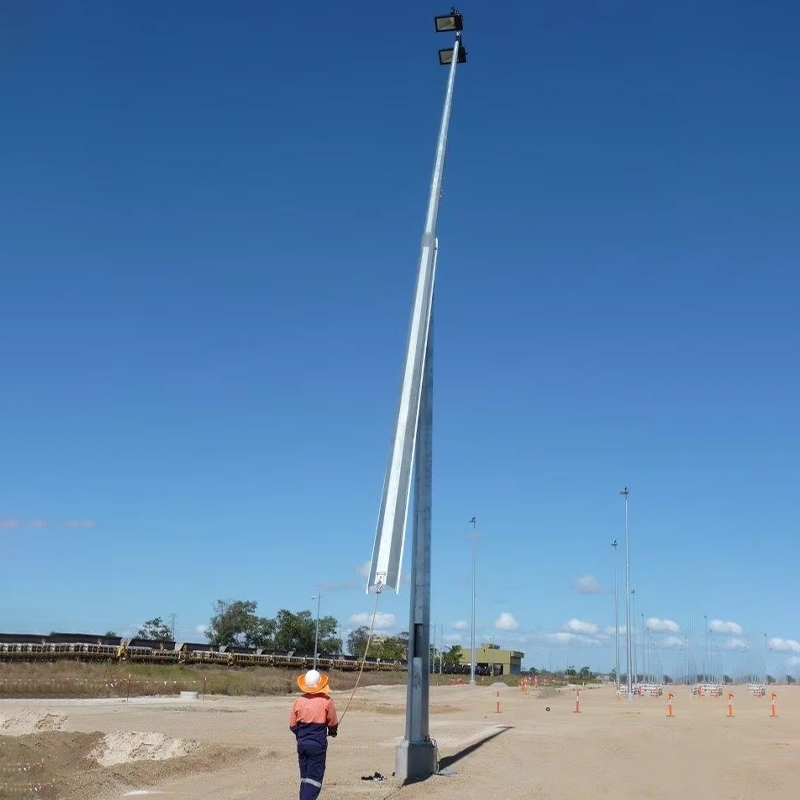
Look for hot-dip galvanized shafts with a zinc coating thickness in the 65-85 micron range, plus a powder coat if color matching is required. Hinged poles are a good option where maintenance access is limited because the luminaire can be lowered to ground level. The 3 to 16 m galvanized steel hinged poles cover most residential and collector road applications while keeping installation and maintenance practical.
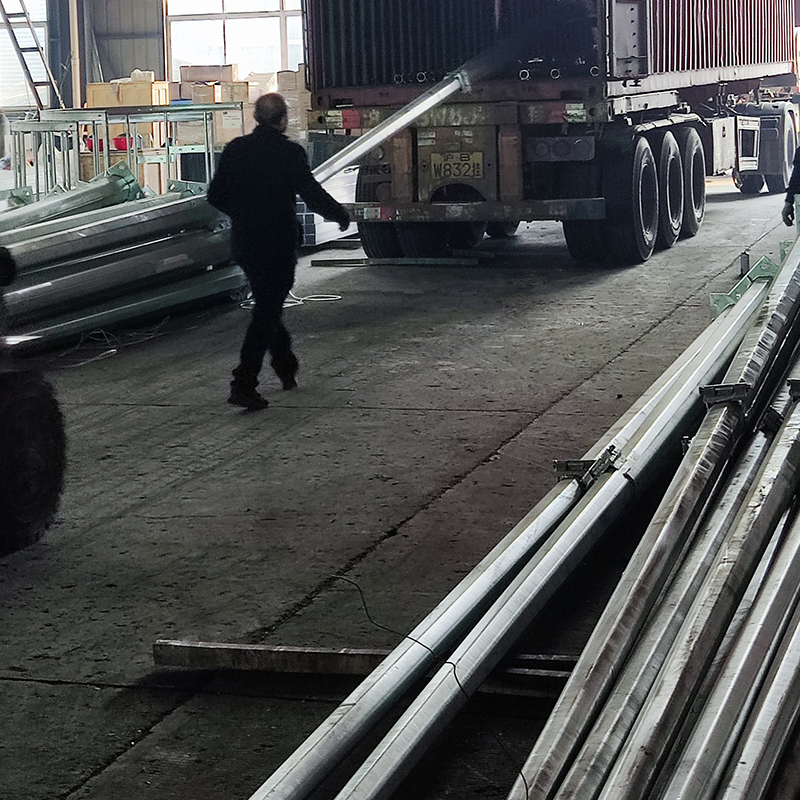 Wholesale 3 to 16M Galvanized Steel Hinged Poles Suppliers, Factory - DDK Tech E DDK Tech Elecfacility Yangzhou Co., Ltd. is China wholesale 3 to 16M Galvanized Steel Hinged Poles suppliers and factory,Introducing our ... View Product →
 Ask your supplier for a structural calculation report that confirms the pole shaft, flange plate, and anchor bolts are sized for the actual wind zone and luminaire weight of the project. A pole that is tall enough photometrically but too weak structurally is a liability in bad weather.
Poles above 12 m require special transport in most regions. If your site has restricted access, consider hinged or sectional poles that can be assembled on site. Confirm the foundation anchor bolt layout with the pole base flange dimensions before pouring concrete.
The size of street lights is not a fixed number; it is an output of geometry, photometry, and structural conditions. Start with the road class and width, pick a mounting height that satisfies uniformity, and confirm it with the local lighting standard. Then translate mounting height into pole height, add the arm and its drop, and check wind load and foundation requirements.
Working with an experienced manufacturer simplifies this process because the supplier can translate your height and photometric requirements into a manufacturable pole, lamp, and solar configuration. If you need a reference point for your next project, use the application table above, then ask the factory for structural documentation and sample drawings before you commit to a final size.
المنتجات ذات الصلة
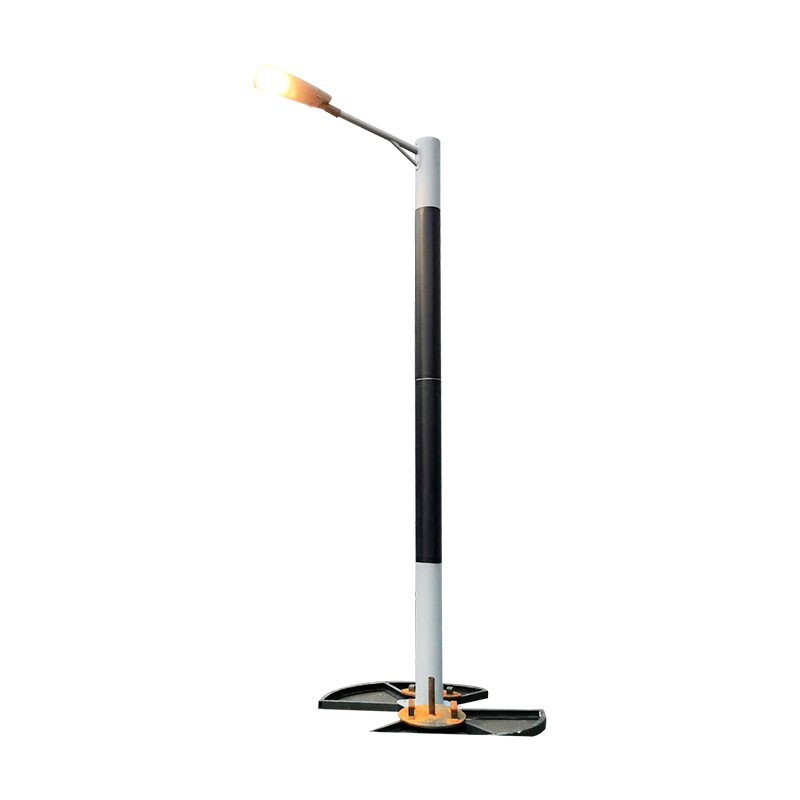 DDK-SSPL-2000 آلاف أسطوانة القطب الشمسي أحادي/مزدوج ومصابيح LED في الشارع
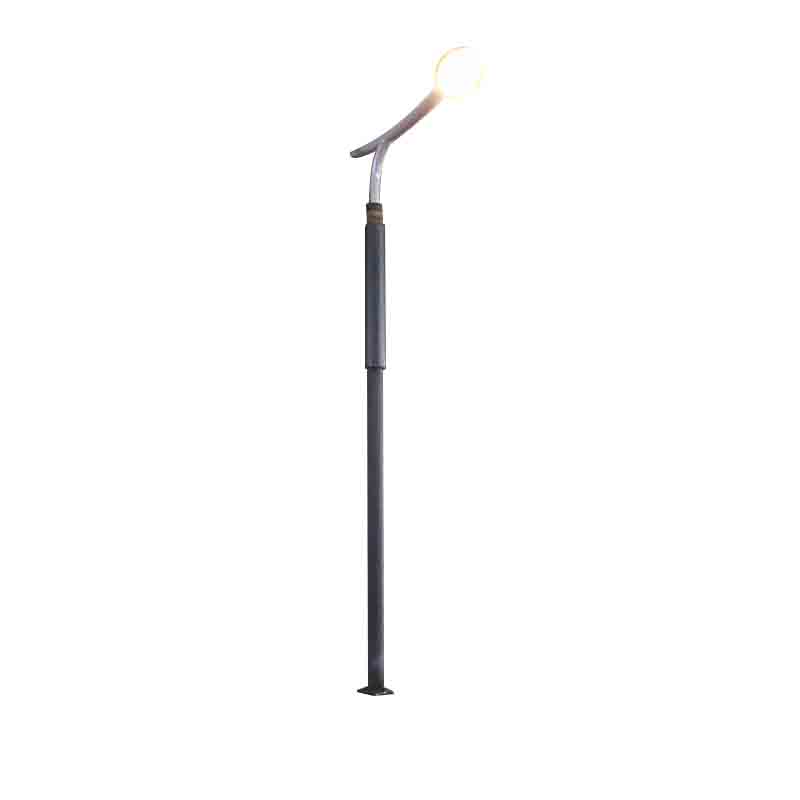 DDK-SSPL-2002 قطب شمسي الأسطوانة مع رأس المصباح
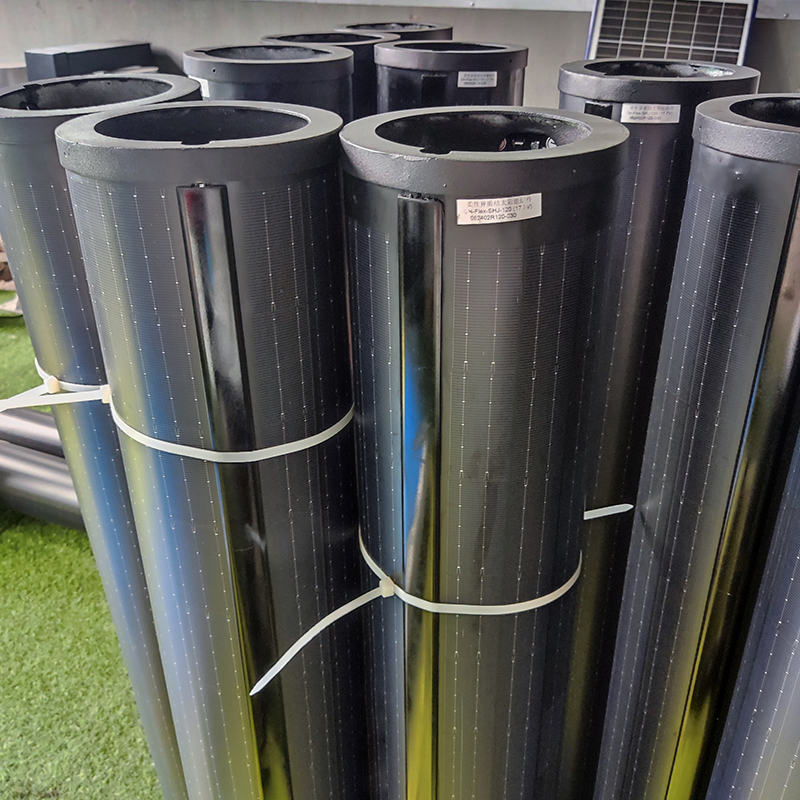 لوحة شمسية مرنة 140 واط: حل طاقة عالي الأداء وأنيقة ومتعددة الاستخدامات لإضاءة أقطاب الإضاءة وإضاءة الحديقة
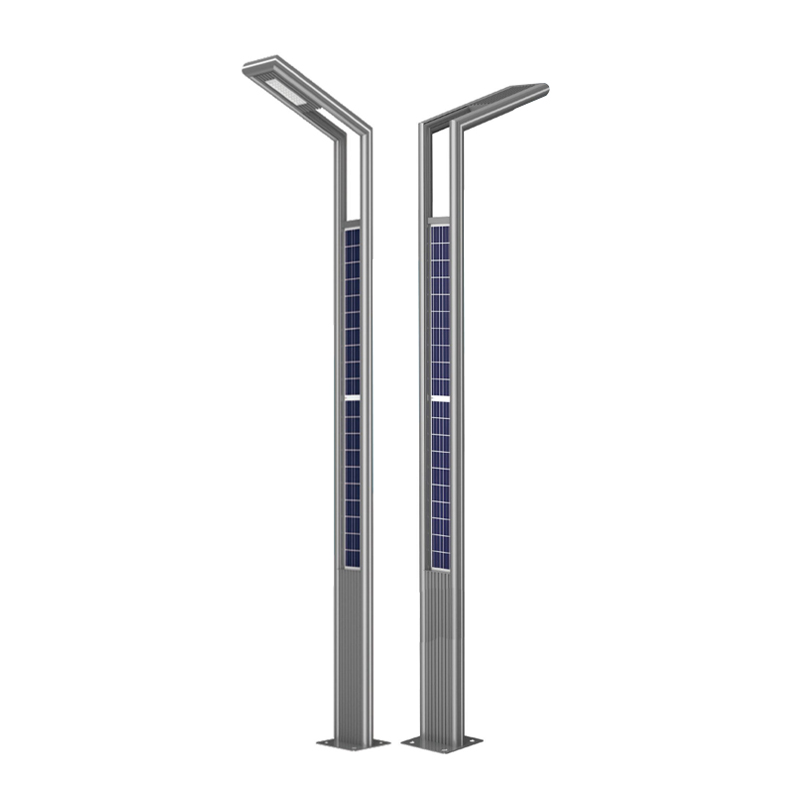 DDK-GN003 جوانب مزدوجة قطب الألومنيوم الشمسي المتكامل
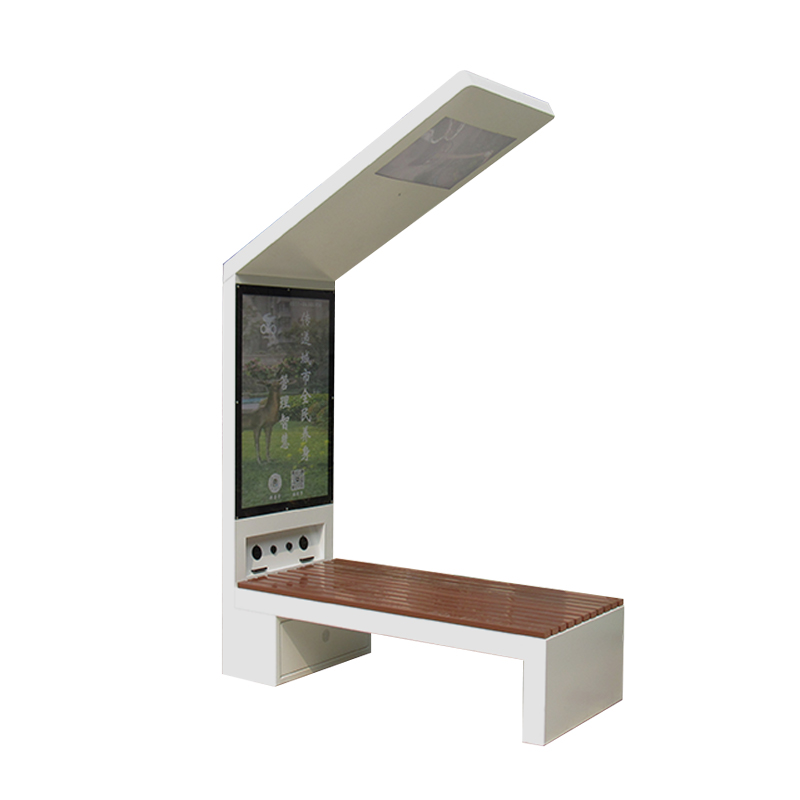 DDK-2000A شحن وحدة ويفي للطاقة الشمسية طاولة في الهواء الطلق مع سقف في الأعلى
 DDK G01 هجين أشعة الشمس والرياح المتكاملة العدسات الشمسية كلها في ضوء واحد
 أقطاب مخصصة لضوء الشوارع السداسي ذو السداسي المربى في الهواء الطلق للإضاءة الخارجية
 من 3 إلى 16 مترًا أعمدة مفصلية من الصلب المجلفن
اتصل بنا
180 متر جنوب تقاطع شارع نانبي وطريق شوبا بمدينة قاويو بمدينة يانغتشو بمقاطعة جيانغسو الصينية.
+86-18811954888
ddk@cnddk.net
 English
 русский
 Español
 عربى
عربى

